Introduction:
In the world of modern web development, efficient database management and streamlined interaction with databases are crucial for building robust applications. Prisma, an open-source database toolkit, has emerged as a popular choice among developers for simplifying database access and providing an intuitive Object-Relational Mapping (ORM) solution. In this blog post, we'll explore the world of Prisma, its key features, advantages, and use cases, without delving into code. By the end, you'll understand why Prisma has gained significant traction in the Node.js ecosystem.
What is Prisma?
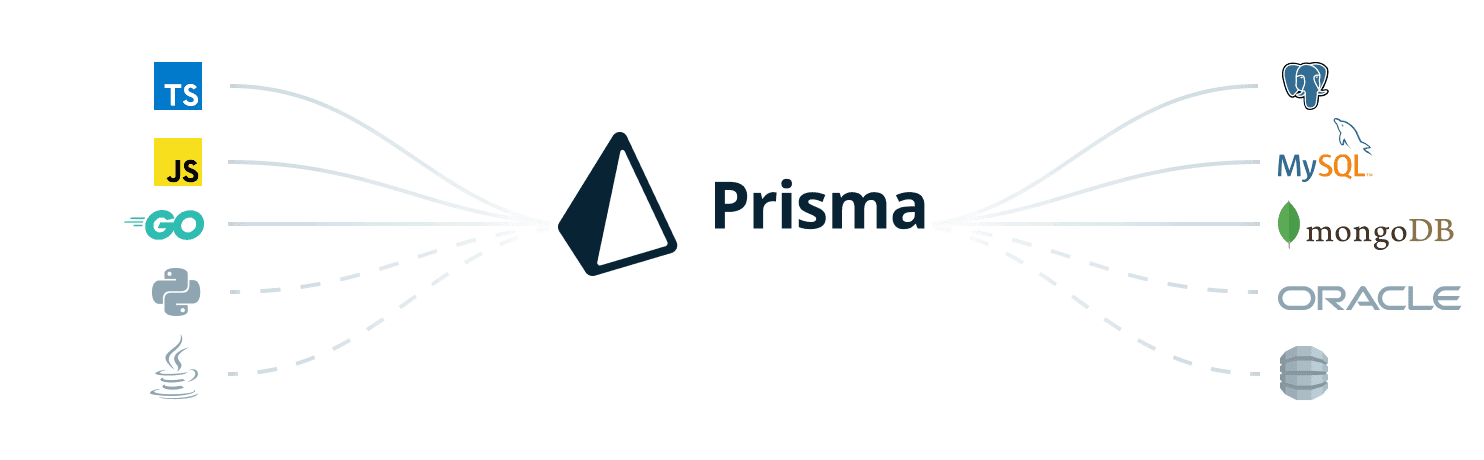
Prisma is a powerful database toolkit that simplifies database access and provides a modern ORM solution. It supports various databases such as MySQL, PostgreSQL, and SQLite, and seamlessly integrates with Node.js applications. Prisma allows developers to define their data models using a declarative schema and provides a set of tools for database management and querying.
Advantages of Prisma:
-
Declarative data modeling: Prisma's strength lies in its declarative data modeling approach. Developers can define their data models using Prisma's intuitive schema definition language. This declarative approach simplifies the process of mapping database tables to application objects and eliminates the need for writing complex SQL queries.
-
Type-safe queries: Prisma enables developers to write type-safe database queries using its powerful query API. By leveraging TypeScript, Prisma provides autocompletion, type-checking, and code intelligence, reducing the chances of runtime errors and enhancing developer productivity.
-
Database migrations: Prisma's database migration feature allows developers to manage database schema changes over time seamlessly. It provides a set of commands to create, update, and revert database migrations, making it easy to keep the database schema in sync with the application's evolving requirements.
-
Database agnostic: Prisma supports multiple databases, allowing developers to switch between databases with ease. This flexibility is valuable when working on projects that may require different databases for development, testing, or production environments. Prisma abstracts away the specific database implementation details, enabling a smooth transition between database systems.
-
Real-time data synchronization: Prisma provides real-time data synchronization capabilities through its integration with the GraphQL subscriptions feature. This feature allows applications to receive real-time updates whenever relevant data changes in the database. It is particularly useful for building real-time collaboration tools, chat applications, and live dashboards.
-
Performance optimization: Prisma optimizes database queries by generating efficient SQL queries based on the provided data models and queries. It also implements various caching mechanisms to improve performance. Prisma's query engine handles the complexity of query optimization, enabling developers to focus on building features rather than fine-tuning database access.
Conclusion:
Prisma has transformed the way Node.js applications interact with databases. Its declarative data modeling, type-safe queries, database migrations, and database agnosticism make it a valuable tool for simplifying database access and managing data models. By leveraging Prisma's capabilities, developers can build scalable and maintainable applications with ease.
Whether you're developing a small-scale project or a large-scale enterprise application, Prisma provides an intuitive and powerful ORM solution. Its seamless integration with Node.js, TypeScript support, and comprehensive tooling make it a developer-friendly choice.
Prisma's growing community, active development, and extensive documentation further reinforce its position as a go-to database toolkit in the Node.js ecosystem. So, if you're looking to streamline database access, enhance productivity, and optimize performance in your Node.js applications, Prisma is certainly worth exploring.
Embrace Prisma, simplify your database interactions, and unlock the power of an intuitive ORM solution in your Node.js projects.